
The appointment was correct when it was booked. Then the truck hit weather in Tennessee, and now it is two hours late to a slot that has not moved.
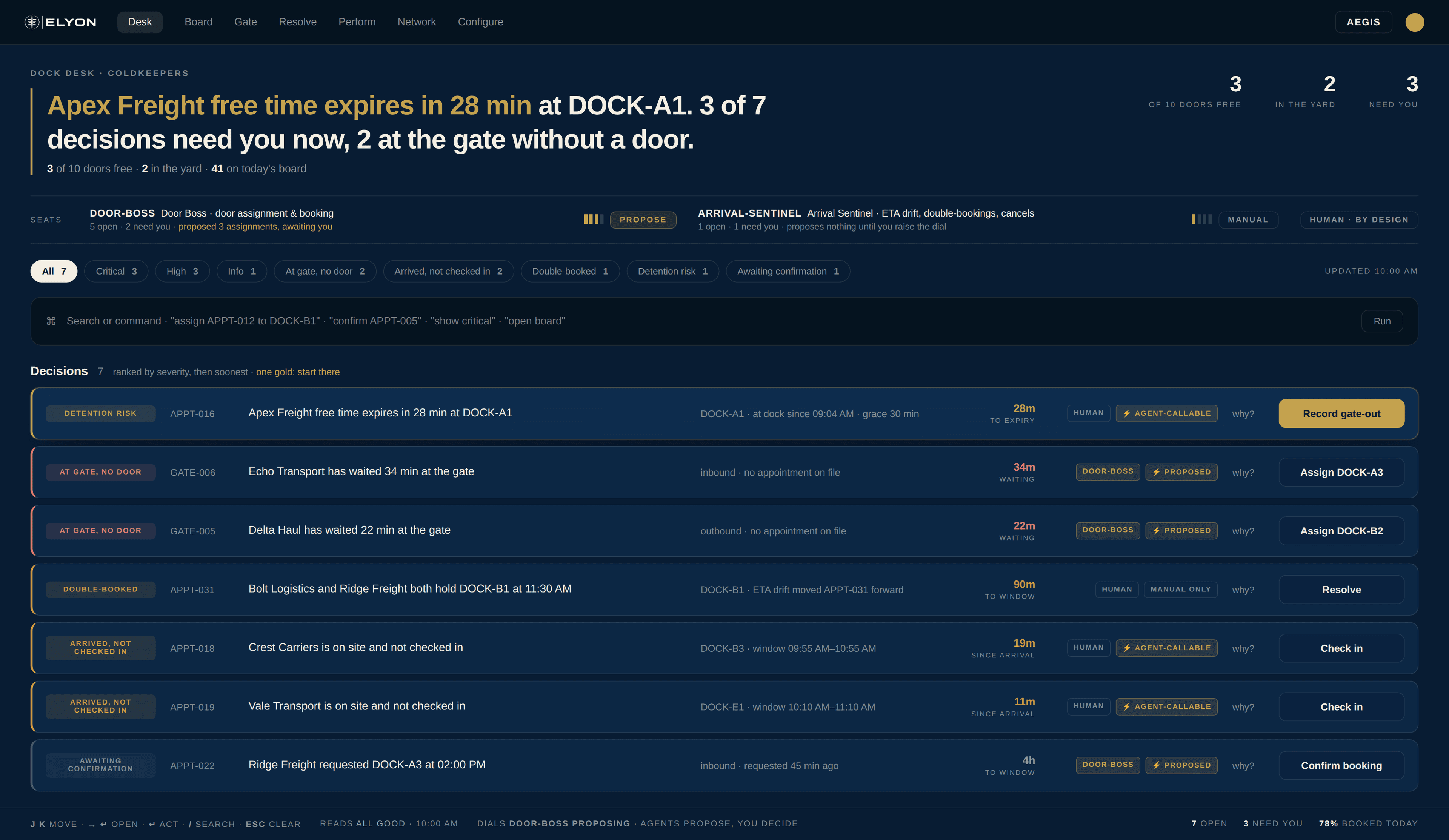
Everything after that is predictable. The driver arrives to a door that was given to somebody else. He waits. Detention starts. Your receiving team, already short, absorbs a truck they did not plan for, which pushes the next three. By four in the afternoon the board bears no resemblance to the plan, and the person holding it together is doing it by phone.
Nobody made a bad decision here. The plan was simply made once, in the morning, against conditions that stopped being true by ten.
The appointment is a promise with no owner
A dock appointment is really an agreement between four parties: the carrier, the driver, the receiving floor, and whoever owns the freight. When conditions change, all four need to know, and in most operations the mechanism for that is a person with a phone.
So the failure is not scheduling. It is maintenance. The schedule is a living thing being managed as a static document.
Watch what the phone actually costs. The scheduler calls the carrier to confirm. The carrier calls the driver. The driver is driving, so it goes to voicemail. Meanwhile the receiving supervisor has already moved a crew to a door for a truck that is not coming for another two hours, and the crew stands there. Each call is two minutes. The gap it leaves is ninety.
Arrivo, the ELYON dock and appointment scheduling module, holds the gate, the board and the yard as one state, names the next decision, and lets your team, or an agent, make it in one click. The phrase worth pulling out is "as one state." The gate knowing something the board does not is how a truck ends up checked in and invisible.
Self-service is not the win. Self-correction is.
Most dock scheduling tools sell carrier self-booking, and it is genuinely useful. Carriers book their own doors, your scheduler stops being a switchboard, and the calendar fills without anyone typing it.
But self-booking only fixes the first hour of the appointment's life. It does nothing for the seven hours after, which is when everything actually changes.
The harder and more valuable behavior is the appointment that rebooks itself when the ETA moves. Not an alert telling a person the ETA moved. Not a flag on a screen. The slot itself changing, the board reordering, and the carrier and the floor both told, before the truck arrives at a door it cannot use.
This is also where dock scheduling stops being a dock problem. The ETA comes from the road, which means it comes from tracking. An appointment system that cannot hear an ETA change is going to be wrong every time it matters most. That connection is the whole argument in supply chain visibility that acts before the phone rings: knowing the truck is late is worthless unless something downstream moves.
Detention is an argument you lose on evidence
Detention disputes are rarely about whether the truck waited. Both sides know it waited. They are about when the clock started, and neither party can prove it.
Your record says the driver checked in at 14:20, because that is when somebody at the gate typed it. The carrier's record says 13:45, because that is when the driver texted dispatch. The difference is thirty-five minutes, times a few hundred events a month, and it is settled by whoever argues harder rather than whoever is right.
Holding the gate and the board as one state is what closes this. Arrival is recorded when it happens, not when it is transcribed. The clock is the same clock for everyone. You will still pay detention, because sometimes you genuinely held the truck. What ends is paying detention you did not owe because you could not prove otherwise.
The no-show, and the appointment that was never real
There is a second failure that looks nothing like a late truck and costs just as much.
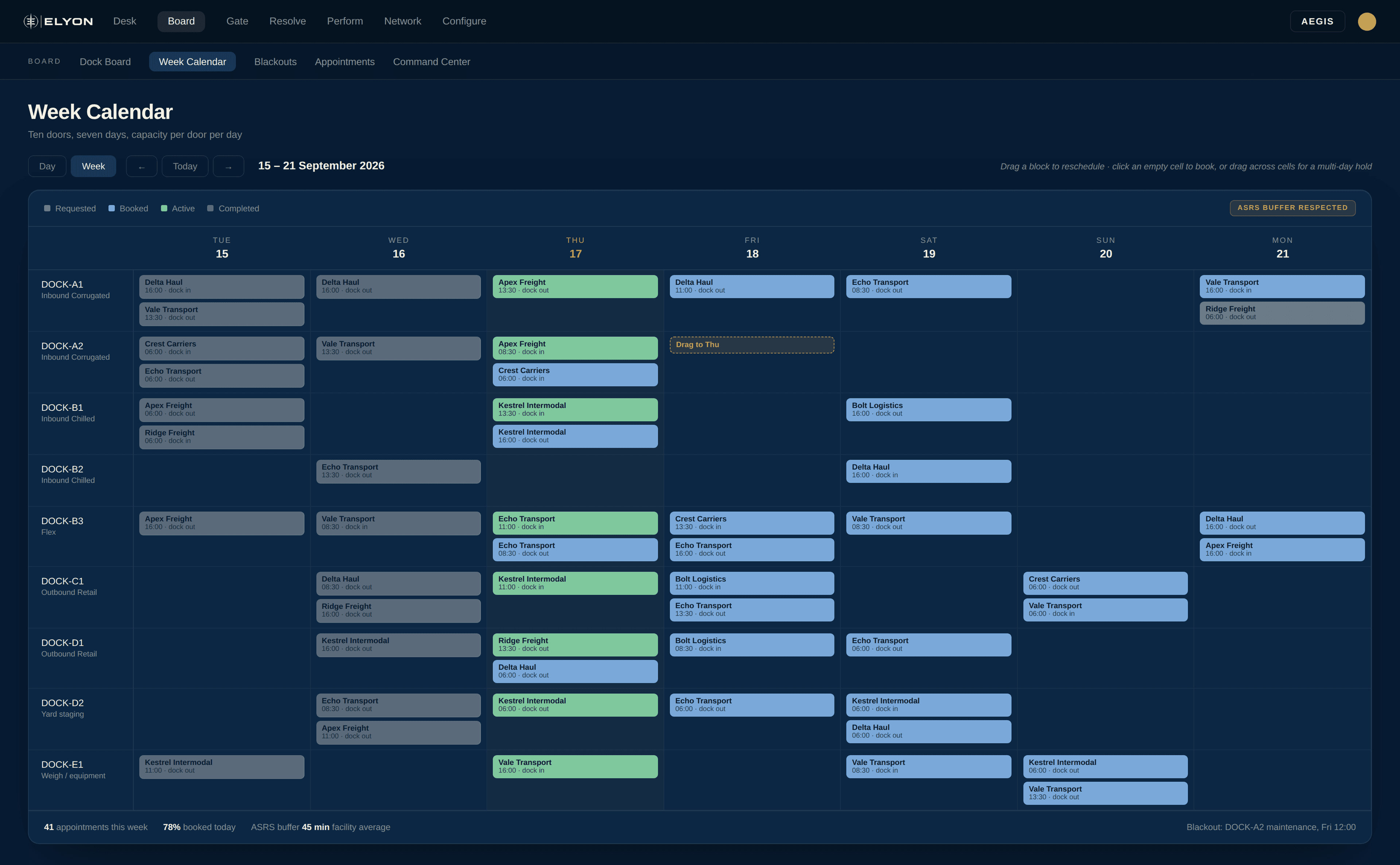
A carrier books a slot on Tuesday for Friday. By Thursday the load has been re-covered by somebody else, or cancelled, or rolled to next week. Nobody tells the dock. Friday morning your board still shows a truck, and your supervisor still holds a door and a crew for it.
That door is gone for the day. Not because it was used, but because it was reserved for something that stopped existing on Wednesday.
Rigid grids make this worse. When a dock is carved into fixed hour blocks, every no-show wastes a whole block, and every truck that needs ninety minutes either takes two blocks or runs into the next appointment. The grid was drawn for the convenience of the calendar, not for the shape of the work, and the floor pays the difference all day.
Two things help, and neither is a bigger calendar. The first is holding the appointment against the load rather than against the clock, so that when the load changes state the appointment hears about it. The second is letting the slot go the moment it is known to be dead, rather than at the moment the truck fails to appear.
The floor behind the door
A dock is only as good as what happens once the freight is inside, and this is where appointment plans quietly die.
You can schedule perfectly and still fall apart because the floor had no idea what was coming, or because the putaway from the last three trucks is not done, or because the cutoff for outbound is in forty minutes and nobody sequenced against it.
Volta runs the warehouse floor as one desk: putaway, cutoffs, holds and counts, with numbers that declare their own coverage before they report it. That last part deserves a moment. A count that tells you how much of the building it actually covered is a different instrument from a count that just gives you a number. One supports a decision. The other invites a false one.
Stock accuracy is the same story one level up. Scorta runs inventory with the ability to replay your real decisions against a policy before you grant it, which is an unusually honest way to automate: prove it would have made the calls you made, on your own history, before it is allowed to make them unattended. Some policies never graduate, and that is a feature.
Where to start if the board is the bottleneck
Three moves, in order of how much relief they buy for the effort.
Let carriers book their own doors. It removes a switchboard job nobody wanted, and it makes the calendar real rather than a reflection of who called.
Wire the ETA to the appointment. This is the one that changes the day. An appointment that cannot hear about a late truck is a plan with no feedback loop.
Make arrival a system event, not a transcription. Gate, board and yard on one clock. Every detention conversation afterward is shorter, and the ones you should win, you win.
None of this requires the floor to work faster. That is usually the thing being asked for, and usually the wrong ask. The trucks are not arriving too slowly. They are arriving at times nobody updated the plan for.
If the drivers waiting at your doors are burning their remaining legal hours while they sit, the cost lands somewhere else again: hours of service truth when your fleet runs four ELD brands.
A schedule made once in the morning is a guess about the afternoon. The question is whether anything corrects it before the truck shows up.